Druk Path Trek
Overview
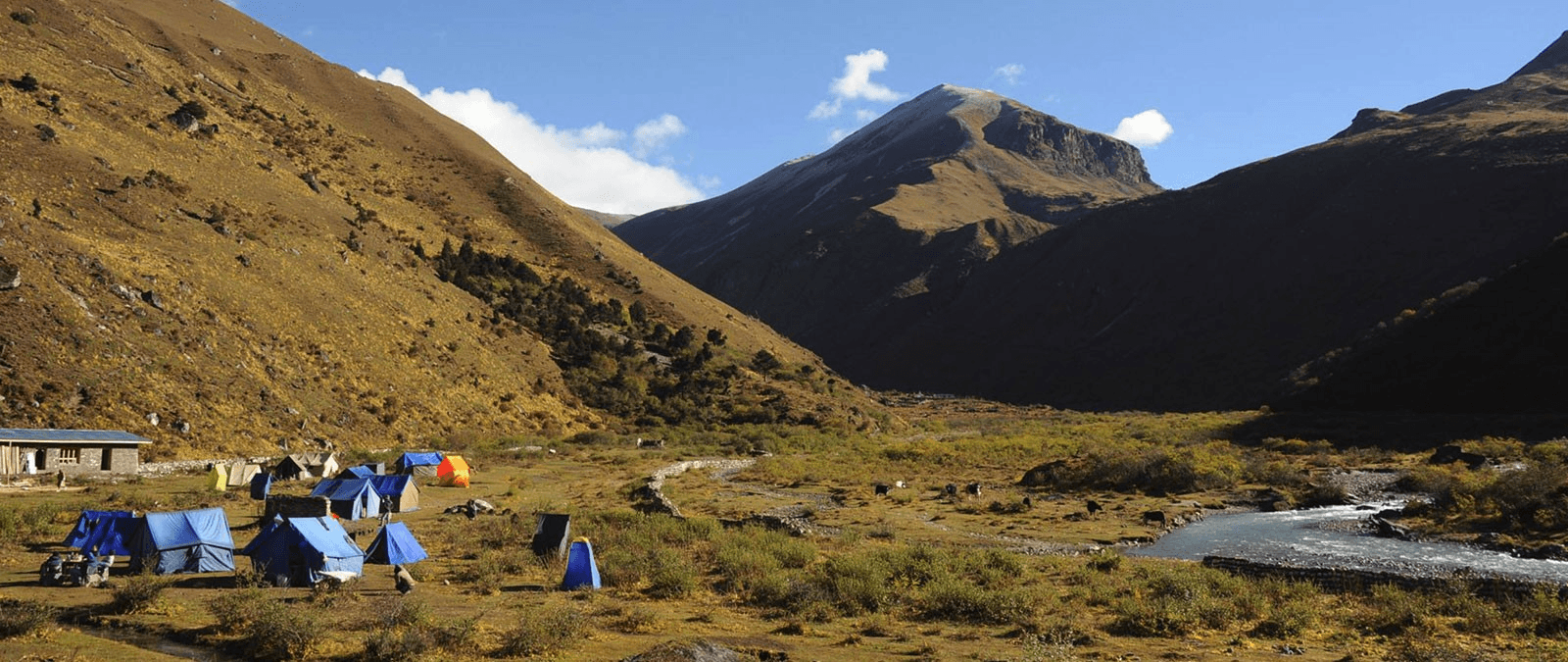
The most popular short trek in Bhutan, connecting Paro and Thimphu. Trek across mountain ridges, past pristine lakes, and through rhododendron forests. Enjoy local cuisine, cultural immersion, and breathtaking scenery throughout the day.
This itinerary is designed to give you a comprehensive experience of Bhutan's unique culture and stunning landscapes.
Highlights
- Jimilang Tsho Lake
- Phajoding Monastery
- Views of Mt. Gangkar Puensum
- High altitude ridges
What's Included
- Full trekking crew (cook, assistants)
- Pack animals for luggage
- Sleeping tents and dining tent
- All meals on trek
Places Visited
Itinerary
Day 1: Arrival in Paro & Pre-Trek Orientation
Touch down at Paro International Airport, one of the world's most thrilling landing approaches, where the pilot navigates the aircraft between steep valley walls before setting down on the runway flanked by farmhouses and prayer flags. Your guide and driver meet you at arrivals and transfer you to your hotel in Paro town. After freshening up and having lunch, begin your cultural orientation with a visit to Ta Dzong—the cylindrical National Museum of Bhutan perched on the hillside above Rinpung Dzong. The museum's galleries provide an invaluable introduction to the flora, fauna, textiles, weapons, and ceremonial objects of Bhutan, much of which you will encounter firsthand during the trek. The taxidermy section in particular introduces you to the animals that inhabit the trail corridors: the Himalayan monal pheasant with its explosive iridescent plumage, the elusive blood pheasant, and the blue sheep of the upper ridges. From the museum terrace, the view of Rinpung Dzong below and the Paro valley stretching away in both directions gives you a sense of the landscape you will be crossing on foot. Time permitting, visit the romantic ruins of Drukgyel Dzong at the valley's northern end, built in 1649 to guard against Tibetan invasion and partially destroyed by fire in 1951. The evening is dedicated to a thorough equipment check and briefing with your head guide, who will walk you through the itinerary day by day, review the weather forecast, confirm your sleeping bag rating is appropriate, and ensure your personal kit is properly weighted. Enjoy a welcome dinner of traditional Bhutanese cuisine—ema datshi, red rice, and butter tea—and sleep well. The trek begins tomorrow.
Day 2: Acclimatization Hike to Tiger's Nest Monastery
No Bhutanese trekking experience is properly begun without a visit to Taktsang Goemba, and for the Druk Path Trek—which begins its climbing immediately from Paro—this acclimatization hike is not merely ceremonial but physically essential. Rise early and drive to the base of the trail, where horses carry riders as far as the viewpoint cafeteria. The trail climbs steeply through pine and cedar forest, gaining approximately 900 meters in altitude to reach the monastery at 3,120 meters. Keep a controlled pace today: the point is acclimatization, not speed. Notice how your body responds at increasing elevation—the breathing rate, the slight heaviness in the limbs—and calibrate accordingly. The forest along the trail is extraordinarily beautiful, the trees draped in old-man's-beard lichen and the air carrying the sharp resin scent of pine. At the cafeteria viewpoint, pause for tea and allow the full visual impact of Taktsang to settle over you: the cluster of golden-roofed temples suspended impossibly above a sheer 300-meter granite drop, connected by a waterfall that falls in a white thread between the cliff face and the monastery walls. Those who wish to enter the monastery should plan to visit in the morning before the midday rush. Inside, sacred halls hold statues of Guru Rinpoche in his eight manifestations, butter lamps line every ledge, and the cave where the Guru is said to have meditated for three months in the 8th century lies at the heart of the complex. Return to Paro by mid-afternoon, have a long lunch, and rest. Your trekking gear should be organized and ready to load onto pack animals by evening.
Day 3: Trek Day 1 – Paro to Jele Dzong: The Climb Begins
The Druk Path Trek officially begins this morning. Your driver takes the group to the trailhead near Ta Dzong, where the pack animals are loaded and the support crew begins their parallel march toward tonight's camp. The initial climb is steep and demands a measured pace from the start—the trail ascends immediately through blue pine forest, with Paro town visible below and shrinking with each switchback. The forest here is dense and fragrant, and during the spring months the trail edges are lined with blooming rhododendrons in shades of red, pink, and white. Pass traditional farmhouses surrounded by apple orchards and potato fields before the vegetation transitions to pure alpine terrain as elevation increases. The trail is well established but at times rough underfoot, requiring attention to boot placement on loose soil and rock. After approximately 4–5 hours of sustained climbing, the ridge broadens and the ancient silhouette of Jele Dzong (3,400m) appears—a compact, traditional fortress-monastery sitting on a rocky promontory with commanding views in every direction. The dzong dates to the 16th century and served as a meditation retreat for senior monks of the Drukpa Kagyu lineage. If the resident caretaker monk is present, your guide will arrange access to the lhakhang within, where a small but beautifully maintained shrine holds centuries-old statues and sacred texts. Camp is set up in the meadow below the dzong, and the crew has hot soup and tea ready as you arrive. The evening view from camp—the Paro valley to the west, the dark forested ridges of the Himalayan foothills rolling away to the south, and the first stars of the evening appearing in a deep violet sky—announces that you have truly left the world below.
Day 4: Trek Day 2 – Jele Dzong to Jangchulakha: The Great Ridge Walk
This is the day the Druk Path reveals its defining character: a sustained ridge walk with one of the most spectacular dual-valley panoramas in all of Bhutan. From Jele Dzong camp, the trail climbs briefly before settling onto the main ridge that forms the watershed between the Paro valley to the west and the Thimphu valley to the east. Walking this ridge is a genuinely extraordinary experience—with each side of your body in a different valley, you have a 270-degree view of mountain ranges, forested hillsides, and tiny farmhouses far below. On clear autumn mornings, the towering white pyramid of Mt. Jomolhari (7,326m) dominates the northern horizon, joined by Jichu Drake (6,989m) and the serrated profile of the Tsherimgang group. It is one of the finest mountain panoramas accessible on a walking trail anywhere in the world. The ridge trail is largely flat to gently undulating, a welcome change from the previous day's relentless climbing, and the ground underfoot transitions between open meadow, dwarf rhododendron scrub, and patches of wind-sculpted fir. Look for Himalayan monals here—the male's spectacular iridescent plumage makes it unmistakable even at a distance—and scan the rock outcrops for blood pheasants and Himalayan snowcock. Blue sheep are occasionally spotted on the rocky upper slopes. After approximately 15 kilometers, arrive at Jangchulakha (3,780m), a traditional yak-herding camp used by pastoral communities who drive their animals to these high summer pastures each spring. The stone shelters of the yak herders are empty in autumn, giving the camp a pleasantly wild, lonely character. Set up tents as the afternoon light turns the surrounding ridges gold, and gather around the cook's fire for a warm dinner as the temperature drops sharply.
Day 5: Trek Day 3 – Jangchulakha to Jimilang Tsho: The First High Lake
The glacier-fed lakes of the Druk Path Trek are the route's most celebrated natural wonders, and today you reach the first of them: Jimilang Tsho, a shimmering high-altitude lake that is the crown jewel of the trek's middle section. Depart Jangchulakha along the continuing ridge trail, which offers persistent mountain views before dipping slightly into a forested section of ancient, moss-hung fir. The trail passes through this cathedral forest—dark, damp, and intensely atmospheric—before emerging onto open moorland that approaches the lake basin. Jimilang Tsho (3,880m) occupies a wide bowl in the ridge system, its still waters reflecting the surrounding mountains and the passing clouds. The lake is sacred in Bhutanese Buddhist tradition and is believed to be home to a protective deity who takes the form of a serpent spirit; you may notice small offerings placed at the water's margin by herders who camp here seasonally. The lake is also renowned for its population of large brown trout—visible on clear days as dark shadows moving slowly below the surface—though fishing is restricted. Camp is set up on the grassy shore, as close to the water as the terrain allows. On windless evenings, the lake surface becomes a perfect mirror reflecting the sky and the ridgeline, creating one of the most photographed views on the entire trek. The silence here is profound and complete—no roads, no villages within earshot, only the sound of wind across the water and the occasional whistle of a marmot from the surrounding slopes. Sit with your tea and allow the stillness to settle around you.
Day 6: Trek Day 4 – Jimilang Tsho to Simkotra Tsho: Highest Camp on the Trek
Push higher today as the trail continues through the lake district of the Druk Path, passing one sacred water body after another in a landscape that feels entirely untouched except for the thread of trail underfoot. Depart the camp at Jimilang Tsho as the early morning mist still hangs over the water—a scene of otherworldly beauty at sunrise—and follow the trail northward through dwarf rhododendron scrub that in spring blazes with crimson flowers but in September and October wears the dusty, muted colours of the Himalayan autumn. The trail traverses rolling terrain, losing and gaining modest elevation, and passes the small and less-visited Janetsho lake, a quieter sibling to Jimilang Tsho tucked under a rocky headwall. Continue climbing as the vegetation thins further and the character of the landscape becomes more austere—open, wind-swept, dominated by the vast blue dome of the Himalayan sky. You may encounter yak herder camps here: seasonal structures of stone and timber where families spend the warmer months with their animals. Interactions with these herders, facilitated by your guide, offer an intimate window into one of Bhutan's most ancient pastoral traditions. Arrive at Simkotra Tsho (4,110m), the highest camp on the Druk Path Trek, another glacial lake sitting in a rocky amphitheatre beneath the main ridge. From the camp, views extend across the high plateau to the Bhutan Himalayan range — on the clearest days, the silhouette of Gangkhar Puensum (7,570m), the world's highest unclimbed mountain, is visible to the northeast. The temperature at this altitude drops rapidly after sunset; ensure your sleeping bag is rated for the conditions and have hot drinks ready. Despite the cold, spend some time outside after dark—the altitude and absence of light pollution here produce a night sky of extraordinary density and clarity.
Day 7: Trek Day 5 – Simkotra to Phajoding to Thimphu: The Grand Descent
The final day of trekking is a long and emotionally charged one, beginning at altitude with the best mountain views of the entire route and ending with the warm embrace of Thimphu's hotels and restaurants far below. Wake early and wait for the light: the sunrise from the ridge above Simkotra Tsho, with the glaciated peaks of the Bhutan Himalaya lit in pink and amber against the predawn darkness, is worth every early alarm. After a hot breakfast, climb the short but steep ascent to the high point of the pass above camp (approximately 4,210m). This is where the Druk Path Trek makes its most dramatic revelation: on a clear day, the massive white quadrilateral of Gangkhar Puensum (7,570m) — the world's highest unclimbed peak, rising in Bhutan's far north — dominates the northern panorama. It remains unclimbed not because of technical impossibility but by royal decree; the Bhutanese government has banned climbing of peaks above 6,000 meters out of respect for the mountain deities believed to inhabit them. Spend a reverential moment at the pass, add a stone to the cairn, and begin the long descent toward Thimphu. The trail drops steeply at first through rocky terrain before entering the forest zone and arriving at Phajoding Monastery — a medieval monastic complex clinging to the ridge above the Thimphu valley at approximately 3,600 meters. Phajoding (meaning 'the place of Phajo') was established in the 13th century and consists of over ten temples and two retreat centers. Resident monks, who live here year-round in extraordinary isolation despite their proximity to the capital, will sometimes invite visiting trekkers in for butter tea. The view from Phajoding over the Thimphu valley below — the entire capital laid out like a map, from the gleaming golden dome of the Buddha Dordenma to the great bulk of Tashichho Dzong — is one of the finest urban panoramas in the Himalayan world. Continue the descent through blue pine forest to the Motithang area of Thimphu, where your vehicle will be waiting. The first hot shower in five days has rarely felt so welcome.
Day 8: Thimphu Sightseeing & Drive to Paro
After the physical demands of five days on the ridge, today is a gentle, pleasurable day of cultural exploration in Bhutan's unique capital city—the only capital in the world with no traffic lights, where police officers direct vehicles from ornately decorated booths in the centre of junctions. Begin with a visit to Motithang Takin Preserve, just a short walk from where yesterday's descent ended. The takin—Bhutan's peculiar national animal—is a large, shaggy creature resembling an unlikely hybrid of a cow and a mountain goat, and according to Buddhist legend it was created by the Divine Madman Lama Drukpa Kunley who fused the bones of a cow and a goat in a miraculous act. After the preserve, drive up to the Buddha Dordenma, a 51-meter-tall bronze Buddha statue seated on a hill overlooking the entire southern valley—one of the largest Buddha figures in the world, and an arresting presence in the Thimphu skyline. Continue to the Folk Heritage Museum, housed in a beautifully preserved traditional farmhouse, for a final look at the domestic tools, agricultural implements, and ceremonial objects that shape rural Bhutanese life. After lunch, stroll through Thimphu's Clock Tower Square and the colourful craft bazaar—a perfect opportunity to pick up handwoven textiles, carved wooden bowls, incense, or thangka paintings as mementos of the trek. In the late afternoon, make the scenic 1.5-hour drive back to Paro along the Wang Chhu river valley. Arrive in Paro in time for a celebratory farewell dinner—a chance to toast the completion of the Druk Path Trek with your guide and fellow trekkers over traditional Bhutanese food and perhaps a glass of award-winning local whiskey.
Day 9: Departure
Your final morning in Bhutan arrives gently, with the sound of bird calls in the Paro valley and the distant outline of the ridges you crossed on foot visible from your hotel window. Depending on your flight time, there may be opportunity for one last quiet stroll through Paro's charming main street, where wooden-fronted shops sell handmade paper, local hand-woven fabrics, prayer wheels, and aromatic incense. Your guide can help identify the most authentic pieces—a length of yathra wool textile, a set of hand-carved prayer beads, or a thangka scroll painting hand-produced by students at the Institute for Zorig Chusum. When the time comes, your driver will transfer you to Paro International Airport. Check-in at one of the most beautiful and intimate airports in the world—a single terminal decorated in traditional Bhutanese architectural style. As you clear security and wait to board, allow yourself a moment to reflect on the arc of the journey: the high ridge walks, the sacred lakes mirroring the sky, the ancient monasteries appearing at unexpected moments in the forest, the warmth of the support crew who carried and cooked and guided through every long day. The Druk Path Trek connects two of Bhutan's greatest valleys across some of the most beautiful mountain terrain on earth. It is an experience that rearranges something quietly and permanently inside those who walk it. Tashi Delek—good fortune and farewell from the Land of the Thunder Dragon.
Ready to Book?
Contact us for a personalized quote.