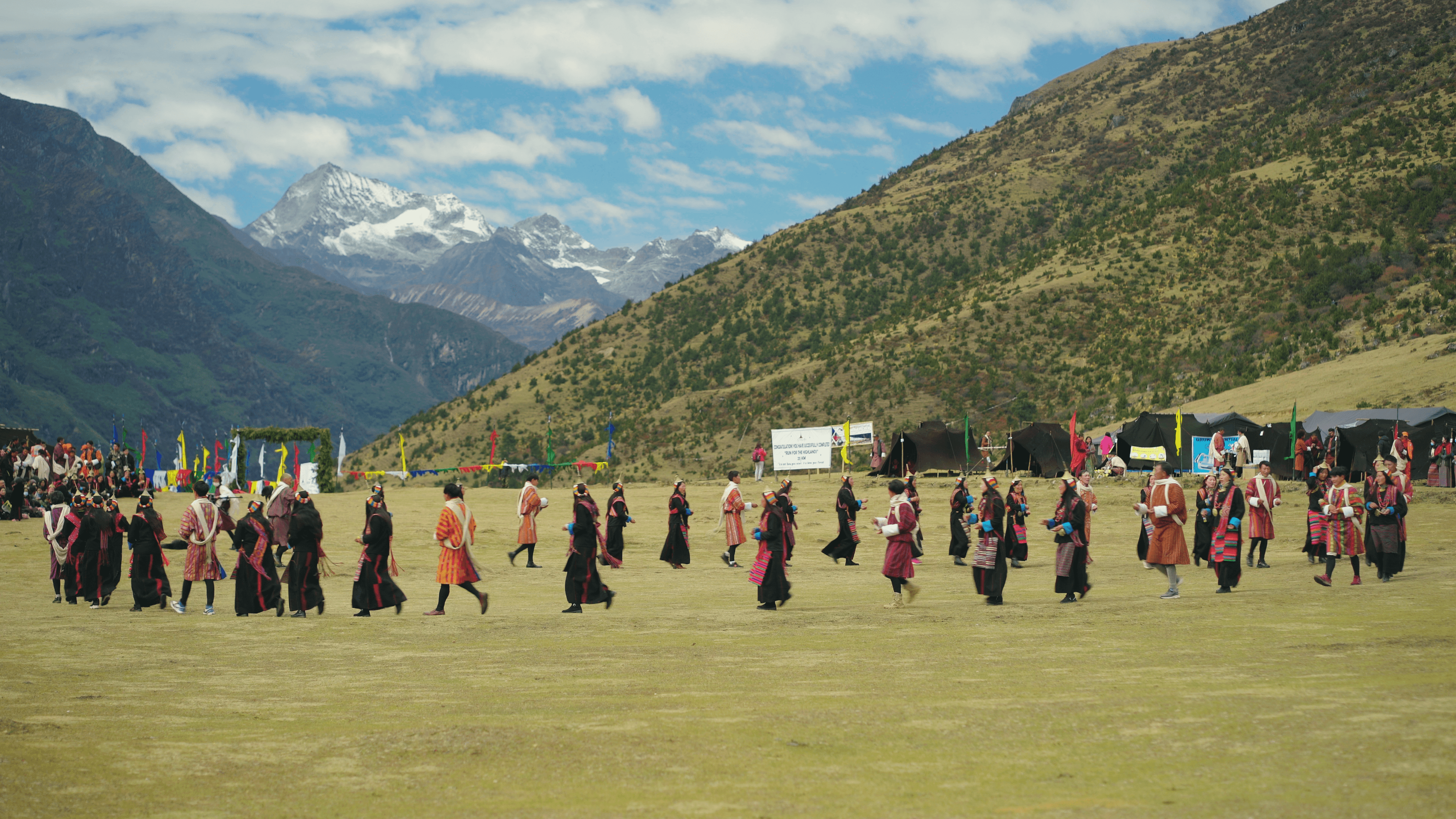
Royal Highland Festival
Overview
Experience the unique culture of Bhutan's highland nomads in Laya. Witness the Royal Highland Festival featuring yak contests, traditional games, and vibrant textiles. Enjoy local cuisine, cultural immersion, and breathtaking scenery throughout the day.
This itinerary is designed to give you a comprehensive experience of Bhutan's unique culture and stunning landscapes.
Highlights
- Attend the Royal Highland Festival in Laya
- Experience nomadic lifestyle
- Scenic helicopter ride (optional)
- Gasa Hot Springs
What's Included
- Special festival permits
- Accommodation in tents/homestays in Laya
- All meals and transport
- Guide and support staff
Places Visited
Itinerary
Day 1: Arrival in Paro
Welcome to the Land of the Thunder Dragon! Your cultural festival adventure begins with arrival at Paro International Airport. After clearing immigration, meet your guide who will accompany you throughout this unique journey. Transfer to your hotel in Paro and take time to rest and acclimatize. In the afternoon, visit the ancient Kyichu Lhakhang, one of Bhutan's oldest and most sacred temples, built in the 7th century by Tibetan King Songtsen Gampo. The temple's serene atmosphere and beautiful gardens provide a perfect introduction to Bhutanese spirituality. Continue to Paro Rinpung Dzong, meaning 'Fortress on a Heap of Jewels.' This massive fortress-monastery dominates the Paro valley and serves as both the administrative center and monastic body. Walk through its courtyards, admire the intricate woodwork and paintings, and learn about its role in Bhutanese history. Cross the traditional covered bridge (cantilever bridge) that spans the Paro Chhu river. In the evening, your guide will brief you on the upcoming Royal Highland Festival and what to expect in the remote Laya region. Enjoy a welcome dinner featuring Bhutanese cuisine. Rest well tonight as tomorrow begins your journey to one of Bhutan's most remote regions.
Day 2: Paro - Gasa
After an early breakfast, embark on a scenic drive to Gasa, one of Bhutan's most remote districts. The journey takes you first to Punakha, crossing the spectacular Dochula Pass (3,100m) adorned with 108 memorial chortens. On clear days, the pass offers panoramic views of the eastern Himalayan range, including several peaks over 7,000 meters. Stop at the beautiful Dochula cafeteria for tea and photos. Descend into the subtropical Punakha valley, where the climate becomes noticeably warmer. Visit the magnificent Punakha Dzong, strategically positioned at the confluence of the Pho Chhu (father river) and Mo Chhu (mother river). This architectural masterpiece served as Bhutan's capital until 1955 and remains the winter residence of the central monastic body. After lunch in Punakha, continue the drive north to Gasa, following the Mo Chhu upstream. The road becomes narrower and more winding as you enter the mountains. The landscape changes dramatically, with terraced rice fields giving way to pine forests and eventually alpine vegetation. Arrive in Gasa in the late afternoon. The highlight of the evening is a therapeutic soak in Gasa's natural hot springs (Gasa Tshachu), famous throughout Bhutan for their healing properties. The hot springs are believed to cure various ailments, and locals travel from across the country to bathe here. Relax in the mineral-rich waters while surrounded by mountain scenery. Overnight in Gasa, preparing for tomorrow's trek to Laya.
Day 3: Trek to Laya
Today begins your trek to Laya, one of Bhutan's highest and most isolated villages. After breakfast, start the trek from Gasa, initially following a well-maintained trail that climbs steadily through pristine blue pine and rhododendron forests. The path follows the Mo Chhu river upstream, crossing it several times on sturdy bridges. As you gain altitude, the forest composition changes, with fir and hemlock trees becoming more common. You'll pass through small clearings where yak herders have their summer camps, and might encounter herders moving their animals to higher pastures. The trail can be steep in sections, so maintain a steady pace. After about 6-7 hours of trekking, covering approximately 18 kilometers and gaining over 1,000 meters in elevation, arrive at Laya village (3,800m). Laya is unlike anywhere else in Bhutan. The village is home to the Layap people, who maintain a distinct culture, language, and traditional dress. The women wear unique conical bamboo hats with a bamboo spike on top, black yak-hair jackets, and silver jewelry. The village consists of traditional stone houses with wooden shingle roofs, surrounded by potato and turnip fields. Check into your tent camp or basic homestay. The facilities are simple but the cultural experience is authentic and unforgettable. In the evening, interact with local villagers and learn about their nomadic lifestyle. The Layaps are primarily yak herders and cordyceps collectors. Rest well tonight at this high altitude, preparing for the festival tomorrow.
Day 4: Royal Highland Festival - Day 1
Wake to the crisp mountain air and the sounds of the village coming to life. Today is the opening day of the Royal Highland Festival, a unique celebration of highland culture established to preserve and promote the traditions of Bhutan's nomadic communities. After breakfast, walk to the festival grounds, usually a large open field near the village. The festival atmosphere is electric, with villagers dressed in their finest traditional attire. Layap women wear their distinctive conical hats, heavy silver jewelry, and colorful striped aprons. Men sport their best ghos and traditional felt boots. The opening ceremony typically features speeches by local officials and sometimes members of the royal family, who are patrons of this event. Throughout the day, witness a variety of traditional competitions and performances. The yak-related events are particularly fascinating—watch as herders compete in yak racing, where these massive animals thunder across the field. There's also yak riding, which is as challenging as it looks! Other competitions include traditional Layap wrestling, archery (Bhutan's national sport), and khuru (dart throwing). Between competitions, enjoy performances of traditional highland dances and songs, many of which tell stories of the nomadic lifestyle, yak herding, and the harsh mountain environment. Local artisans display and sell traditional handicrafts including woven textiles, yak wool products, and cordyceps (the valuable medicinal fungus). Sample local food including yak cheese, butter tea, and ara (local alcohol). The festival is also a social gathering where Layaps from different villages meet, exchange news, and arrange marriages. Spend the entire day immersed in this unique cultural celebration. Return to your camp in the evening, filled with unforgettable experiences.
Day 5: Royal Highland Festival - Day 2
The second day of the Royal Highland Festival brings even more exciting events and deeper cultural immersion. After breakfast, return to the festival grounds for another full day of celebrations. Today's highlights include traditional Layap wrestling, where competitors grapple in a style unique to the highlands. The wrestling matches are intense and draw large, enthusiastic crowds. Watch as skilled wrestlers demonstrate techniques passed down through generations. Another major attraction is the nomadic sports competitions, which test skills essential for highland life. These might include stone throwing for distance, rope making competitions, and yak loading races where teams compete to load pack animals the fastest. The festival also features beauty pageants where young Layap women compete, judged not just on appearance but on their knowledge of traditional culture, weaving skills, and ability to perform traditional songs. Throughout the day, various cultural performances continue—masked dances, folk songs, and storytelling sessions where elders share legends of the highlands. Take time to explore the handicraft stalls more thoroughly. You might find unique items like hand-woven yak wool blankets, traditional bamboo hats, or locally made cheese. Engage with the Layap people, who are generally friendly and curious about visitors. Your guide can help translate and facilitate meaningful interactions. Learn about the challenges of highland life, the importance of yaks to their economy, and how climate change is affecting their traditional lifestyle. As the sun sets over the mountains, the festival atmosphere becomes more relaxed and social. Join in traditional circle dances if you're invited. This is your last night in Laya, so savor every moment of this extraordinary cultural experience.
Day 6: Laya - Gasa - Punakha
Bid farewell to Laya and the warm Layap people who have shared their culture with you. After breakfast, begin the trek back down to Gasa. The descent is easier than the ascent, taking about 5-6 hours. Enjoy different perspectives of the landscape as you descend through the forests. The trail that seemed so challenging on the way up now feels more manageable. Reach Gasa by early afternoon, where your vehicle awaits. If time permits and you're not too tired, enjoy one more soak in the hot springs to soothe your trekking muscles. Begin the drive to Punakha valley, retracing your route from a few days ago. The descent from the mountains back to the subtropical valley is dramatic, with the temperature rising noticeably. Arrive in Punakha in the evening and check into your hotel. After days of basic camping in Laya, the comfort of a proper hotel feels luxurious. Enjoy a hot shower and a comfortable bed. Dinner at your hotel features a variety of Bhutanese and international dishes. Reflect on the incredible festival experience you've just had—few travelers get to witness such authentic cultural celebrations in such remote locations. Rest well tonight as tomorrow brings more cultural exploration in Punakha.
Day 7: Punakha - Thimphu - Paro
After a leisurely breakfast, spend the morning exploring Punakha valley. Visit the magnificent Punakha Dzong if you haven't already, or return for a more detailed tour. This dzong is considered the most beautiful in Bhutan, with its strategic location, stunning architecture, and historical significance. Walk across the suspension bridge to Punakha village and experience rural Bhutanese life. The bridge, one of the longest in Bhutan, sways gently as you cross, offering views of the dzong and the confluence of the two rivers. After lunch, drive to Thimphu, Bhutan's capital city. The drive takes about 2.5 hours, crossing back over Dochula Pass. In Thimphu, visit some of the capital's highlights. The National Memorial Chorten is a must-see, where elderly Bhutanese circumambulate the stupa throughout the day, spinning prayer wheels and murmuring mantras. If time permits, visit the Buddha Dordenma statue, a massive 169-foot bronze and gold Buddha that overlooks the valley. The views from here are spectacular. You might also visit the Takin Preserve, home to Bhutan's national animal, the takin—a strange-looking creature that's part goat, part antelope. In the late afternoon, continue the drive to Paro (about 1.5 hours). Check into your hotel in Paro. Enjoy a farewell dinner at a traditional Bhutanese restaurant, perhaps with cultural performances. Share stories and photos from your festival experience with your fellow travelers. Tomorrow brings one final adventure before departure.
Day 8: Departure
Your final day in Bhutan. Depending on your flight time, you may have a few hours for last-minute activities. If your flight is in the afternoon, consider a morning visit to a local farmhouse for a traditional Bhutanese breakfast, or do some souvenir shopping in Paro town. The main street has several handicraft shops selling authentic Bhutanese textiles, thangka paintings, prayer flags, and other traditional items. Your guide can help you find quality products and navigate the bargaining process. When it's time, drive to Paro International Airport. The check-in process is relaxed and friendly, reflecting Bhutan's unhurried pace of life. As you wait for your flight, reflect on the extraordinary journey you've had—from the remote highlands of Laya to the cultural richness of the Royal Highland Festival, from ancient dzongs to natural hot springs. Bhutan has a way of touching visitors' hearts and changing perspectives. As your aircraft takes off, enjoy final aerial views of the Paro valley, the terraced fields, traditional farmhouses, and the Himalayan peaks beyond. You leave Bhutan with memories of a unique festival, warm encounters with the Layap people, and a deeper understanding of highland culture. The mountains and the smiling faces of Bhutan will call you back. Tashi Delek!
Ready to Book?
Contact us for a personalized quote.