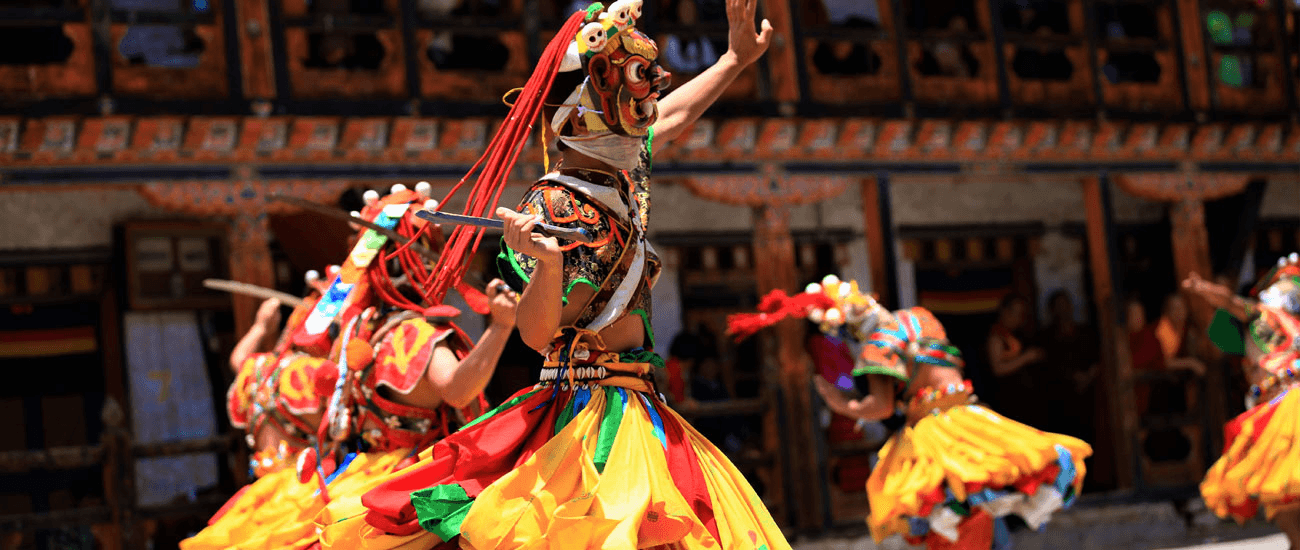
Paro Tshechu Festival Tour
Overview
Witness one of Bhutan's most popular festivals. The Paro Tshechu is a vibrant display of mask dances, religious art, and local fashion held in the spring. Enjoy local cuisine, cultural immersion, and breathtaking scenery throughout the day.
This itinerary is designed to give you a comprehensive experience of Bhutan's unique culture and stunning landscapes.
Highlights
- Unfurling of the Thongdrel (Giant Scroll)
- Mask Dances at Paro Dzong
- Tiger's Nest Hike
- Farmhouse dinner experience
What's Included
- Festival seating permits
- Standard tourist accommodation
- All meals & transport
- Professional cultural guide
Places Visited
Itinerary
Day 1: Arrival Paro
Welcome to Bhutan during one of its most vibrant festival periods! Arrive at Paro International Airport and meet your cultural guide who specializes in Bhutanese festivals and traditions. Transfer to your hotel in Paro town, ideally located near the festival venue. After settling in and having lunch, begin your cultural orientation with a visit to Kyichu Lhakhang, one of Bhutan's oldest and most sacred temples dating back to the 7th century. This ancient temple, with its beautiful orange trees and peaceful atmosphere, provides the perfect introduction to Bhutanese Buddhism. Continue to Paro Rinpung Dzong, the magnificent fortress-monastery where the Tshechu will take place. Walk through its massive courtyards and corridors, admiring the intricate woodwork, colorful murals, and traditional architecture. Your guide will explain the dzong's history and its significance as both an administrative center and religious institution. Cross the traditional cantilever bridge spanning the Paro Chhu river. In the evening, your guide will brief you on the Paro Tshechu—its history, significance, the mask dances you'll witness, and festival etiquette. Learn about the religious and social importance of tshechus in Bhutanese culture. Enjoy a welcome dinner at your hotel. Rest well tonight—tomorrow the festival begins, and you'll want to arrive early to secure good viewing spots!
Day 2: Paro Tshechu - Day 1
Rise early for the first day of the Paro Tshechu, one of Bhutan's most popular and colorful festivals. After breakfast, walk to Rinpung Dzong where the festival takes place. Arrive early (around 8 AM) to secure good seats in the viewing galleries. The atmosphere is electric—thousands of Bhutanese from across the country gather, dressed in their finest traditional attire. Women wear beautiful kiras (traditional dresses) in vibrant colors and intricate patterns, adorned with coral and turquoise jewelry. Men sport their best ghos with colorful kabney (ceremonial scarves) indicating their rank. The opening ceremony begins with monks blowing ceremonial horns and beating drums. Throughout the day, witness a spectacular series of cham (mask dances) performed by monks and laypeople. Each dance has deep religious significance, depicting Buddhist teachings, historical events, or moral lessons. Watch the Dance of the Four Stags, the Dance of the Noblemen and Ladies, and the terrifying Dance of the Judgement of the Dead, where dancers in elaborate costumes and masks portray the Lord of Death judging souls. Your guide will explain the meaning and symbolism of each dance—the colors, movements, and masks all carry specific significance. Between dances, explore the festival grounds. Local vendors sell traditional snacks, ara (local alcohol), and handicrafts. Mingle with locals who are happy to share their festival experience. The social aspect of tshechus is as important as the religious—families reunite, young people meet potential partners, and communities strengthen bonds. Return to your hotel in the late afternoon, overwhelmed by the colors, sounds, and spiritual energy of the festival.
Day 3: Paro Tshechu - Day 2
Another full day immersed in the Paro Tshechu festival. Return to Rinpung Dzong for the second day of celebrations. Today brings different mask dances and performances. Witness the Dance of the Black Hats, one of the most powerful and dramatic dances, where monks in elaborate black hats and costumes perform a ritual dance to subdue evil spirits. The Dance of the Drummers from Dramitse is particularly spectacular, with dancers in animal masks performing intricate choreography while playing drums. Watch the Dance of the Stag and the Hounds, a folk dance that tells the story of a hunter's conversion to Buddhism. Each performance is accompanied by traditional music—cymbals, drums, horns, and oboes creating a hypnotic soundscape. Take time to observe the crowd as much as the performances. Notice how elderly Bhutanese watch with deep devotion, often murmuring prayers. Young people take selfies in their traditional dress. Children run around playing, occasionally stopping to watch the dances. The festival is a complete sensory experience—the vibrant colors of costumes and masks, the rhythmic music, the scent of incense and juniper smoke, the taste of traditional snacks. During breaks, your guide can introduce you to local families, facilitating cultural exchange. Many Bhutanese are curious about foreign visitors and happy to explain their traditions. You might be invited to share ara or butter tea. If you're lucky, you might witness a traditional courtship ritual—young people exchange glances and sometimes phone numbers during festivals! Spend the entire day at the festival, soaking in this unique cultural celebration. Return to your hotel in the evening, perhaps joining other travelers to share experiences over dinner.
Day 4: Thimphu Sightseeing
After two intensive festival days, today offers a change of pace with a drive to Thimphu, Bhutan's capital (about 1.5 hours). The drive follows the Paro and Thimphu rivers through beautiful valleys. Arrive in Thimphu and check into your hotel. After lunch, begin exploring the capital. Start with a visit to Buddha Dordenma, a massive 169-foot bronze and gold statue of Buddha Shakyamuni overlooking the Thimphu valley. The statue houses over 100,000 smaller Buddha statues, creating an impressive display of Buddhist devotion. The panoramic views from this hilltop location are spectacular—the entire Thimphu valley spreads below, with traditional and modern buildings interspersed. Continue to the National Memorial Chorten, built in 1974 in memory of the third King. This is one of Thimphu's most iconic landmarks and a focal point of daily worship. Watch as elderly Bhutanese circumambulate the chorten throughout the day, spinning prayer wheels, murmuring mantras, and prostrating. The devotion is moving to witness. If time permits, visit the Takin Preserve to see Bhutan's national animal, the takin—a unique creature that looks like a cross between a goat and an antelope. According to legend, the takin was created by the Divine Madman (Drukpa Kunley) from the bones of a goat and a cow. Spend the evening exploring Thimphu's main street, browsing handicraft shops, bookstores, and cafes. Thimphu offers a fascinating blend of traditional and modern Bhutan. Enjoy dinner at one of the capital's restaurants, perhaps trying some dishes you haven't had yet.
Day 5: Thimphu - Punakha - Paro
Today brings a full-day excursion to Punakha, one of Bhutan's most beautiful valleys. After an early breakfast, drive over the spectacular Dochula Pass (3,100m), marked by 108 memorial chortens and offering panoramic Himalayan views on clear days. Stop for tea and photos at the beautiful Dochula cafeteria, enjoying the mountain vistas. Descend into the warm, subtropical Punakha valley—the change in climate and vegetation is dramatic. Visit the magnificent Punakha Dzong, strategically positioned at the confluence of the Pho Chhu (father river) and Mo Chhu (mother river). This is considered Bhutan's most beautiful dzong, and it's easy to see why. The massive structure with its golden roofs, whitewashed walls, and intricate woodwork is stunning, especially when viewed from the suspension bridge. The dzong served as Bhutan's capital until 1955 and remains the winter residence of the central monastic body. Walk through its courtyards, temples, and administrative halls. Your guide will explain its historical significance, including its role in Bhutan's unification. If visiting in spring, the dzong is surrounded by blooming jacaranda trees, adding purple blossoms to the scenery. After lunch in Punakha, visit Chimi Lhakhang, the fertility temple dedicated to the Divine Madman. A short walk through rice fields brings you to this charming temple where couples pray for children. The temple is decorated with phallus symbols, reflecting the Divine Madman's unconventional teaching methods. Begin the return journey to Paro in the late afternoon, arriving in the evening. Rest well tonight—tomorrow brings the festival's grand finale and the Tiger's Nest hike!
Day 6: Thongdrel Ceremony & Tiger's Nest
Today is the grand finale of the Paro Tshechu and also includes the iconic Tiger's Nest hike—a full, unforgettable day! Wake before dawn (around 3:30-4:00 AM) and walk to Rinpung Dzong in the darkness. Join thousands of Bhutanese gathering for the Thongdrel ceremony, the festival's most sacred event. Around 4:30-5:00 AM, as the first light appears, monks unfurl the massive Thongdrel—a giant silk appliqué thangka (religious scroll) depicting Guru Rinpoche and other Buddhist deities. The Thongdrel is so large it covers the entire wall of the dzong. According to belief, simply viewing the Thongdrel cleanses one of sins and brings blessings. The atmosphere is deeply spiritual—thousands of people press forward to receive blessings, butter lamps flicker, incense smoke rises, and prayers fill the air. The Thongdrel remains displayed for only a few hours before being carefully rolled up and stored for another year. After witnessing this powerful ceremony and having breakfast, prepare for the Tiger's Nest hike. Drive to the trailhead and begin the ascent to Taktsang Goemba, the monastery clinging impossibly to a cliff 900 meters above the valley. The hike takes 5-6 hours round trip. The trail winds through pine forests adorned with prayer flags, gradually ascending with increasingly spectacular views. Reach the cafeteria viewpoint after about 1.5-2 hours for rest and photos. The final section involves steep stairs carved into the cliff. Inside the monastery, explore temples and meditation caves where Guru Rinpoche meditated in the 8th century. The spiritual energy is palpable. Descend in the afternoon, tired but fulfilled. Celebrate with a farewell dinner, reflecting on an incredible festival and cultural experience.
Day 7: Departure
Your final morning in Bhutan. Depending on your flight time, you may have a few hours for last-minute activities. If departing in the afternoon, consider a morning visit to a local market or handicraft shops for final souvenir shopping. Look for traditional textiles, thangka paintings, prayer flags, or masks similar to those you saw at the festival. Your guide can help you find authentic items and navigate pricing. When it's time, transfer to Paro International Airport. The check-in process is relaxed and friendly. As you wait for your flight, reflect on the extraordinary week you've had—witnessing one of Bhutan's most important festivals, seeing sacred mask dances, experiencing the Thongdrel ceremony, hiking to Tiger's Nest, and immersing yourself in Bhutanese culture. The Paro Tshechu is more than just a festival; it's a window into Bhutan's living Buddhist culture, a celebration of community, and a spiritual experience. As your aircraft takes off and climbs through the mountain valleys, enjoy final views of the Paro valley, the dzong where you witnessed the festival, and the cliff where Tiger's Nest clings. You depart with memories of vibrant colors, sacred dances, warm smiles, and a deeper understanding of Bhutanese culture and spirituality. The festival's energy and Bhutan's magic will stay with you long after you leave. Tashi Delek!
Ready to Book?
Contact us for a personalized quote.