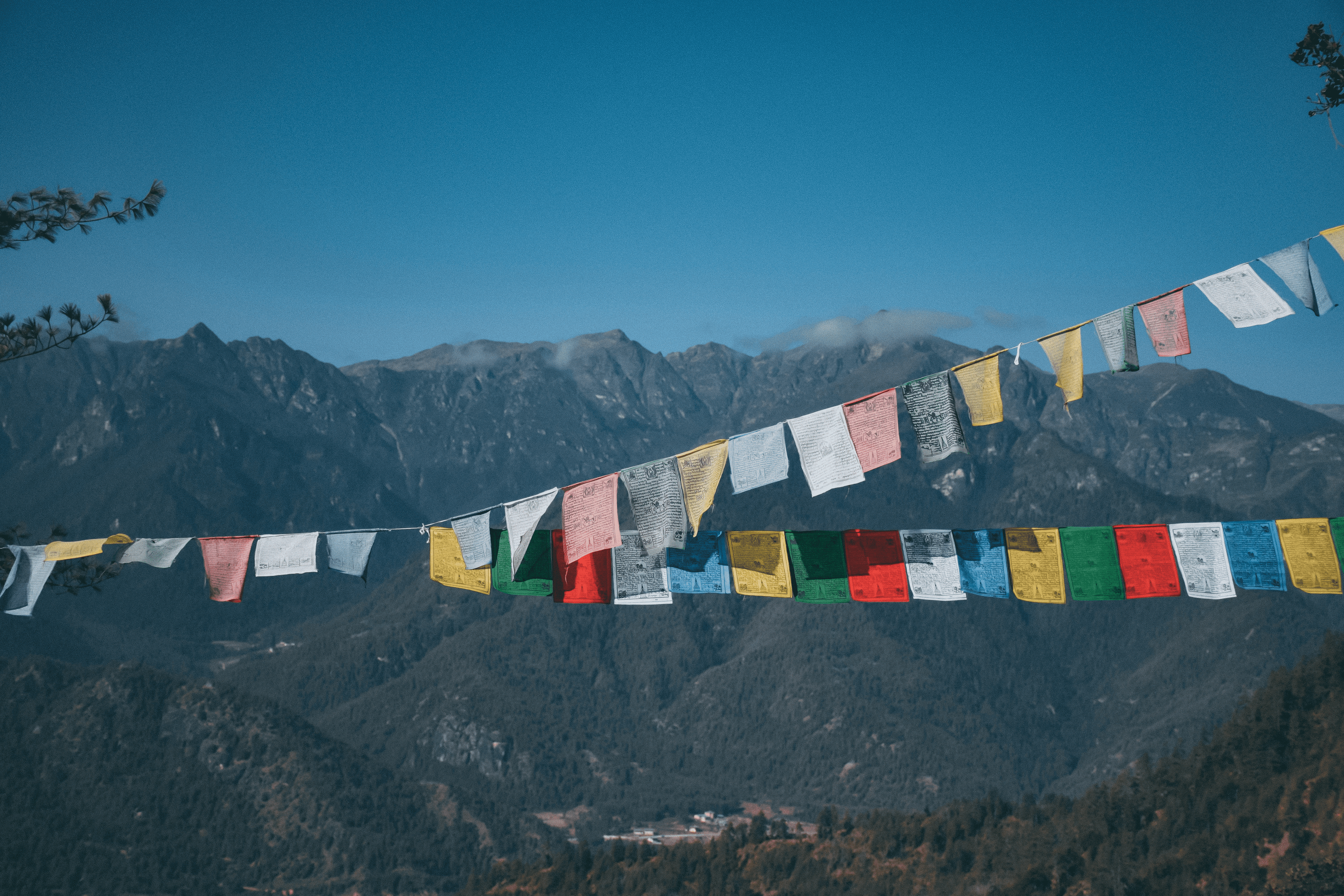
Central Bhutan Explorer
Overview
Journey beyond the west to the spiritual heartland of Bumthang. Explore ancient temples, lush valleys, and the authentic rural life of central Bhutan. Enjoy local cuisine, cultural immersion, and breathtaking scenery throughout the day.
This itinerary is designed to give you a comprehensive experience of Bhutan's unique culture and stunning landscapes.
Highlights
- Bumthang Valley spiritual sites
- Gangtey Valley & Black Necked Cranes
- Trongsa Dzong Museum
- Burning Lake (Mebar Tsho)
What's Included
- All accommodation and meals
- Domestic flight (optional add-on)
- Private vehicle and guide
- Permits for restricted areas
Places Visited
Itinerary
Day 1: Arrival in Paro – Thimphu
Your Central Bhutan Explorer adventure begins at Paro International Airport, where the aircraft navigates dramatically between Himalayan ridges before touching down in the emerald Pa Chhu valley. After clearing immigration and collecting your luggage, your guide and driver will greet you with a warm welcome. The 1.5-hour drive to Thimphu follows the confluence of the Pa Chhu and Wang Chhu rivers through a winding valley of forested ridges, whitewashed farmhouses, and terraced fields stepping up the hillsides. Thimphu (2,334m) is unlike any other capital city on earth: no traffic lights, no skyscrapers, no fast-food chains—just traditional architecture, monks in maroon robes, and a pace of life that feels human and unhurried. Check into your hotel and freshen up before heading to the Clock Tower Square, the social beating-heart of the capital, where teenagers, businesspeople, elderly devotees spinning prayer wheels, and visiting monks all share the same public space in an effortlessly harmonious way. If time allows before dinner, stroll up to the National Memorial Chorten, a beautiful white stupa built in 1974 to honour the third king, perpetually circled by elderly worshippers murmuring mantras. Your guide will brief you on the itinerary ahead over a welcome dinner of traditional Bhutanese cuisine—ema datshi (chili and cheese), red rice, and butter tea—setting the tone for the cultural richness of the days to come.
Day 2: Thimphu Sightseeing
Devote this full day to the surprising depth and variety of Thimphu's cultural and artistic heritage. Begin at the Institute for Zorig Chusum, the government Painting School, where students aged 13 to 21 spend up to six years mastering the 13 traditional arts of Bhutan—thangka painting on cotton canvas, wood carving, clay sculpture, weaving, lacquerwork, and more. The concentration and skill on display from such young students is genuinely moving. Continue to the Folk Heritage Museum, a beautifully preserved three-storey traditional farmhouse complete with its original kitchen tools, butter churns, wooden storage vessels, and sleeping quarters that bring to life the domestic world of pre-modern rural Bhutan. Head uphill to the Motithang Takin Preserve, where Bhutan's national animal—the takin, a stout, woolly creature with a face resembling a goat-cow hybrid—wanders freely in a natural enclosure. According to Buddhist legend, the takin was created by the eccentric 15th-century saint Drukpa Kunley, the 'Divine Madman,' who fashioned it from the bones of a cow and a goat. After lunch at a local restaurant, visit Tashichho Dzong, the imposing fortress-monastery at the edge of the city that serves as both the seat of the national government and the summer residence of the Je Khenpo (Chief Abbot). In the late afternoon, the sight of rows of monks in maroon crossing the courtyard for evening prayers is quietly extraordinary. End the day with a browse through the weekend Centenary Farmers Market, where vendors from across the country sell produce, wild mushrooms, dried yak cheese, and hand-crafted goods.
Day 3: Thimphu – Gangtey (Phobjikha Valley)
Depart Thimphu after breakfast, heading east on the National Highway before climbing to the magnificent Dochula Pass (3,100m), where 108 memorial chortens—built by the Royal Queen Mother to honor Bhutanese soldiers—stand in a circle against the ancient rhododendron forest. On a clear morning, the entire eastern Himalayan range is visible from here: a 50-kilometre wall of snow-streaked peaks including the sacred Gangkhar Puensum, the world's highest unclimbed mountain. Pause for tea and photographs before continuing the descent into the Wangdue Phodrang valley, then climbing again through the Black Mountain range to reach the Phobjikha Valley. As the road crests the final ridge, the valley opens before you like a revelation: a vast, flat, U-shaped glacial basin some 8 kilometres long and 2 kilometres wide, ringed by pine-forested hills and completely devoid of electricity pylons—power lines are prohibited to protect the endangered Black-necked Cranes that winter here from Tibet (October to March). Arrive in Gangtey and check into your lodge or guesthouse, which will likely have a direct view over the valley floor. In the afternoon, visit the magnificent Gangtey Goemba, the largest Nyingmapa monastery in western Bhutan, founded in the 17th century and perched on a low hill at the centre of the valley. Its whitewashed walls, golden roof ornaments, and sweeping valley panorama make it one of the most photographed buildings in Bhutan. Spend the evening in the deep silence of the valley—no traffic noise, no city lights, nothing but the wind and, if in season, the haunting bugling call of cranes across the marsh.
Day 4: Gangtey Sightseeing
Spend a full, leisurely day exploring every dimension of the Phobjikha Valley—its ecology, its monastic culture, and its extraordinary human landscape. Begin early with a walk along the Gangtey Nature Trail, a 5-kilometre loop that descends from the monastery hill through pine forest and across the open marshy valley floor. The trail passes through several dispersed hamlets of traditional farmhouses—handsome two-storey stone and timber buildings decorated with erotic phallus paintings that serve as protection against evil spirits, a tradition associated with Drukpa Kunley. The trail connects to the Black-necked Crane Information Centre on the valley floor, which offers superbly detailed exhibitions on the ecology of the cranes and the valley's wetland ecosystem. The cranes (if visiting between October and March) can be seen at close range in the marsh surrounding the centre—magnificent birds standing over a metre tall, performing elaborate courtship dances and foraging in family groups. After lunch at a local farmhouse restaurant, spend the afternoon at Gangtey Goemba in more depth: attend an afternoon prayer session in the main temple if the monks are present, explore the smaller chapels scattered around the monastery compound, and climb to the roof for a 360-degree panorama of the valley. In the late afternoon, drive or walk to a ridge viewpoint for the sunset—as the light fades from the valley, the farmhouses glow amber and the outline of the encircling hills turns deep blue against the evening sky. Dinner at your lodge, with locally grown vegetables and buckwheat as staples of the menu.
Day 5: Gangtey – Bumthang
Set off early from the Phobjikha Valley, beginning what is the most dramatically varied driving day of the Central Bhutan Explorer. The road climbs from the valley back over the Black Mountain ridge before descending to the central highway at Wangdue Phodrang and then climbing again over the Pele La Pass (3,420m)—traditionally regarded as the geographic boundary between western and central Bhutan. The pass is regularly veiled in mist and draped with prayer flags, and yaks often wander across the tarmac with magnificent indifference to oncoming vehicles. Descend to the Trongsa valley and pause at the extraordinary Trongsa Dzong, the most strategically positioned fortress in the kingdom. Built across a narrow ridge above a deep river gorge, it was from this dzong that the first two kings of Bhutan consolidated their control over the entire country—whoever held Trongsa held Bhutan. Climb to the Ta Dzong watchtower above the dzong, now the Royal Heritage Museum, for exhibits on the Wangchuck dynasty and commanding views over the gorge and forested valleys stretching in every direction. After lunch in Trongsa, continue east over the Yotong La Pass (3,425m) and descend through the Chumey Valley, famous across Bhutan for its master yathra weavers who produce extraordinary striped woollen textiles on traditional back-strap looms—you may stop at a weaving workshop to watch and purchase directly. Arrive in Jakar, the principal town of Bumthang district, as the evening light settles over this ancient spiritual valley. The cool, apple-scented air and the old temples visible in every direction announce your arrival somewhere truly remarkable.
Day 6: Bumthang Sightseeing
Bumthang is often described as the spiritual heartland of Bhutan—a cluster of four sacred valleys that contains more ancient temples per square kilometre than anywhere else in the country, many of them over a thousand years old. Spend this full day immersed in the extraordinary religious heritage of the Choekhor Valley, Bumthang's most significant corridor. Begin at Jambay Lhakhang, one of the oldest temples in Bhutan, built in the 7th century by Tibetan King Songtsen Gampo as one of 108 temples constructed simultaneously across the Himalayan world to subdue a demoness lying across the land. The building has been rebuilt and expanded over the centuries, but its inner sanctum retains an atmosphere of age and accumulated devotion that few other places in Bhutan match. The exterior courtyard hosts one of Bhutan's most spectacular nocturnal fire festivals, the Jambay Lhakhang Drup, in October each year. Drive a short distance north to Kurjey Lhakhang, a three-temple complex of exceptional sanctity. The central temple is built directly over the cave where Guru Rinpoche—the 8th-century saint who brought Tantric Buddhism to Bhutan—meditated and left an impression of his body in the rock face. The sacred juniper forest surrounding the complex is itself regarded as a protector of the valley. Cross the wooden bridge over the Chamkhar Chhu river to reach Tamshing Lhakhang, one of the most significant Nyingma temples in Bhutan, its interior walls covered in some of the oldest surviving religious murals in the country, painted by the great terton Pema Lingpa in the 16th century—still vivid in colour and extraordinary in detail. End the afternoon with a visit to the Swiss Farm and the Bumthang Organic Brewery, a legacy of Swiss development assistance in the 1970s, where Bhutan's beloved Red Panda beer and craft whiskey are produced. Raise a glass to one of the most culturally saturated days of your journey.
Day 7: Bumthang – Punakha
Begin the return journey westward from Bumthang, retracing the central highway through landscapes that feel entirely new in the morning light—valleys that were blue at dusk now shine green and gold, and mountain walls that were hidden behind cloud yesterday may now reveal themselves in full. Retrace the route back over the Yotong La and stop again at Trongsa Dzong for any sightseeing missed on the way east, or simply to absorb the view one final time from the bridge above the gorge. Continue west and cross the Pele La before descending toward Wangdue Phodrang, where the reconstructed Wangdue Dzong—largely destroyed by fire in 2012 and now being painstakingly restored in traditional style—looms on its ridge above the town. Stop for lunch in Wangdue before crossing into the Punakha valley, Bhutan's agricultural paradise and historical capital. The descent from the mountains into Punakha at 1,200 metres brings a dramatic change in climate—the air becomes warm and humid, orange and banana trees line the roadside, and rice paddies cover the valley floor in terraced green. After checking into your hotel, take the 20-minute walk through paddy fields to Chimi Lhakhang, the cheerful Fertility Temple dedicated to Drukpa Kunley, the Divine Madman, whose phallus paintings decorate the surrounding farmhouses and whose blessing couples seek when hoping for children. The evening in Punakha has a relaxed, sensuous quality quite different from the highlands—sit by the river and enjoy the warm air as fireflies appear at dusk.
Day 8: Punakha – Paro
Spend the morning in Punakha before beginning the drive back to Paro. The first stop is the unmissable Punakha Dzong—the 'Palace of Great Happiness'—one of the most beautiful buildings in the entire Himalayan world. The dzong stands at the precise confluence of the Pho Chhu (father river) and Mo Chhu (mother river), its white and ochre walls rising directly from the water like a great ship at anchor. Built in 1637 by Bhutan's founder Zhabdrung Ngawang Namgyal, it served as the country's capital and seat of government until 1955 and remains the winter residence of the central monastic body. In spring, the courtyard is canopied by magnificent jacaranda trees in full purple bloom. Walk the suspension bridge nearby for views of the dzong from the riverbank—one of the classic photographs of Bhutan. After lunch, drive west over the Dochula Pass for a final view of the Himalayan panorama in the afternoon light, which often produces clearer conditions than morning. Descend into the Paro valley, arriving in the late afternoon. Paro is Bhutan's most visited valley—slightly lower and wider than Thimphu, its valley floor checkered with rice paddies, willow trees, and traditional farmhouses. After checking into your hotel, take an evening stroll through Paro's charming main street with its wooden shopfronts and colourful storefronts selling local handicrafts, textiles, and thangka paintings. The town has a warm, relaxed atmosphere quite different from the capital's bustle.
Day 9: Paro Sightseeing
Paro is home to the greatest concentration of significant historical and religious sites in Bhutan, and today is dedicated to exploring them while building toward the journey's most iconic experience. Begin at Rinpung Dzong (the 'Fortress on a Heap of Jewels'), the massive 15th-century fortress-monastery that dominates the lower Paro valley. Cross the traditional covered cantilever bridge that spans the Paro Chhu and enter the dzong's vast courtyard, where monks study, practice ritual dance, and go about their daily routines in a scene that has changed little over centuries. The dzong serves as both the administrative headquarters of Paro district and the monastic body for several hundred monks. Continue to the National Museum of Bhutan, housed in the distinctive round Ta Dzong watchtower above the dzong. Its galleries hold one of the finest collections of Bhutanese art, including ancient thangka paintings, bronze statues, lacquerwork, bronze weapons, postage stamps, and natural history specimens. From the museum terrace, the view down the Paro valley is one of the finest in the country. After lunch, drive to the base of the Taktsang Goemba trail for the hike to the legendary Tiger's Nest Monastery—the single most extraordinary sight in Bhutan and among the most dramatic religious buildings on earth. The monastery clings to a sheer granite cliff face 900 metres above the valley floor, accessible only on foot. The climb through pine forest takes approximately 1.5 to 2 hours to the cafeteria viewpoint, where the sight of the golden-roofed temple complex suspended above the void is genuinely breathtaking. Those who continue down the stone steps and up to the monastery entrance enter sacred halls where Guru Rinpoche meditated in the 8th century, with views from the prayer platforms that extend over the entire Paro valley far below. Return to the valley in the late afternoon for a farewell celebration dinner—your final evening in the Hidden Kingdom.
Day 10: Departure
Your final morning in Bhutan begins gently with the sound of birds in the Paro valley and, from your window, the sight of the ridges and pine-forested hills you have come to know over the past ten days. Depending on your flight time, the morning may offer space for a last quiet walk through Paro's main street—wooden-fronted shops opening their shutters to reveal handmade paper in every colour, hand-woven textiles, carved wooden bowls, prayer flags, incense bundles, and thangka scroll paintings. Let your guide point you toward the most authentic pieces: a hand-loomed kira fabric from Bumthang, a packet of Bhutanese red rice, or a set of hand-carved prayer beads. When departure time comes, your driver will transfer you to Paro International Airport, one of the most beautiful small airports in the world—its single terminal building clad in traditional Bhutanese architectural detail. At check-in, take a final look at the valley through the terminal windows: the Paro Chhu winding through its flood plain, prayer flags over the bridge, the quiet farmhouses on the opposite hillside. The aircraft climbs steeply from the valley, banking between peaks, and for a few minutes the landscape below—Bhutan in its entirety, green and vast and still—is visible through the window before the clouds close in and the world resumes. You leave with a sense of peace, a recalibrated perspective, and the quiet knowledge that you have visited somewhere genuinely unlike anywhere else on earth. Tashi Delek—farewell and good fortune from the Land of the Thunder Dragon.
Ready to Book?
Contact us for a personalized quote.