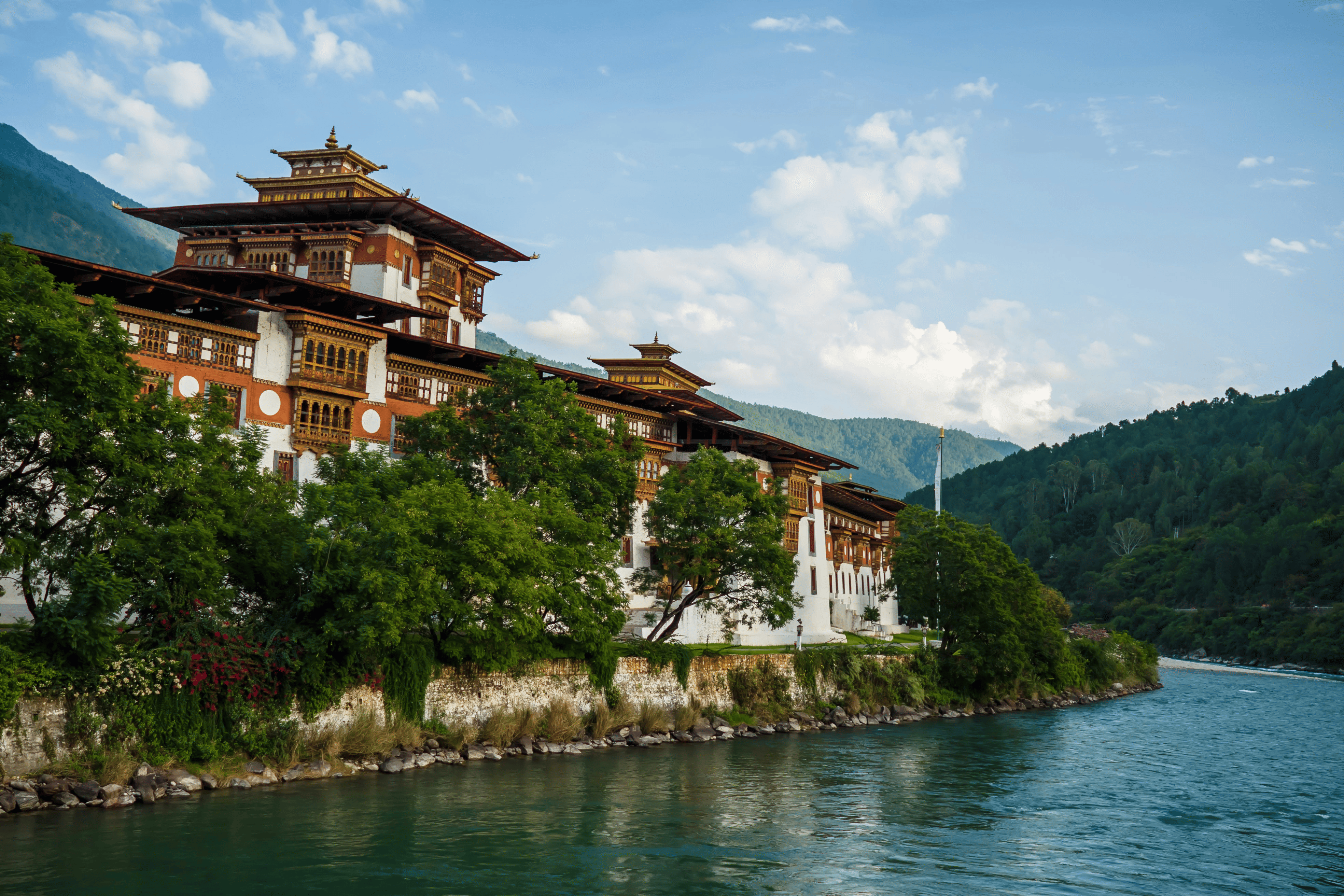
Bhutan Express Tour
Overview
Experience the ultimate journey through Bhutan's cultural heartland. This expanded 8-day tour takes you beyond the basics, deep into the valleys of Thimphu, Punakha, and the pristine glacial valley of Phobjikha. From ancient fortresses to sacred monasteries and breathtaking Himalayan passes, immerse yourself in the Land of the Thunder Dragon.
This itinerary is designed to give you a comprehensive experience of Bhutan's unique culture and stunning landscapes.
Highlights
- Hike to the legendary Tiger's Nest Monastery
- Explore the majestic Punakha Dzong
- Visit the Black-necked Crane valley in Phobjikha
- Panoramic views from Dochula Pass (108 Chortens)
- Cultural immersion in Thimphu & Paro
What's Included
- All internal ground transport
- Certified English-speaking guide
- 3-star accommodation (double occupancy)
- All meals and bottled water
- SDF (Sustainable Development Fee) & Visa fees
Places Visited
Itinerary
Day 1: Arrival in Paro & Journey to the Capital
Your transformative journey begins with a flight into Paro International Airport, widely considered one of the most spectacular aerial approaches in the world. As the aircraft weaves through the towering peaks of the Himalayas, catch your first glimpse of the pristine landscape, terraced hillsides, and the emerald-green Paro valley. Upon landing, the crisp, clean mountain air immediately signals your arrival in the Last Shangri-La. After meeting your personal guide and driver, we embark on a scenic 1.5-hour drive to Thimphu, the kingdom's vibrant capital city. This journey winds along the confluence of the Pa Chhu and Wang Chhu rivers, passing through traditional Bhutanese villages where life moves at a serene pace. Along the way, we'll stop to admire the Chuzom, the meeting point of the two rivers, adorned with three distinct styles of chortens—Bhutanese, Tibetan, and Nepalese. Upon reaching Thimphu (2,334m), check into your hotel and enjoy a brief rest. In the late afternoon, we visit the National Memorial Chorten, a prominent landmark built in memory of the third King, Jigme Dorji Wangchuck. Here, you'll witness the heart of Thimphu's spiritual life as elderly locals circumambulate the stupa in a rhythmic, meditative flow, their prayers wheels spinning in constant devotion. We conclude the day with a visit to the Buddha Dordenma (Buddha Point), where one of the world's largest bronze Buddha statues gazes over the valley. As evening falls, the golden monument radiates a peaceful energy, offering panoramic views of the city lights below. Your first evening in Bhutan concludes with a welcome dinner featuring local delicacies, introducing you to the unique flavors that define this extraordinary culture.
Day 2: Thimphu: Cultural Immersion in the Heart of the Dragon
Today is dedicated to exploring the rich tapestry of Thimphu's cultural and artistic heritage. We begin at the Institute for Zorig Chusum, commonly known as the Painting School, where students undergo years of rigorous training in Bhutan's thirteen traditional arts and crafts. Watching young artisans master woodcarving, embroidery, and thangka painting offers a deep appreciation for the kingdom's commitment to preserving its ancestral skills. Following this, we visit the National Textile Museum, a treasure trove of intricate weaves and royal robes that showcase the complexity and symbolism of Bhutanese textiles. Each pattern tells a story of identity, status, and spirituality. For a lighter touch, we visit the Motithang Takin Preserve to see the Takin, Bhutan's unique national animal that resembles a mix between a cow and a goat—a creature steeped in local mythology and the legends of the 'Divine Madman'. After lunch, we explore the Folk Heritage Museum, a restored 19th-century farmhouse that provides a fascinating glimpse into the traditional rural lifestyle, complete with authentic artifacts and household tools. The highlight of the late afternoon is the majestic Tashichho Dzong, 'The Fortress of the Glorious Religion'. This grand structure serves as the administrative center and the summer residence of the Je Khenpo (Chief Abbot). As we walk through its whitewashed courtyards and admire the intricate woodwork, you'll feel the harmonious blend of secular and sacred power that defines Bhutanese governance. The evening is yours to explore the streets of Thimphu, perhaps visiting local craft bazaars or a cozy cafe to soak in the atmosphere of the world's only capital without traffic lights.
Day 3: Over the Clouds: Thimphu to Punakha via Dochula
Leaving the capital behind, we ascend towards the Dochula Pass (3,100m). This mountain crossing is one of the most beautiful in Bhutan, marked by 108 memorial chortens built by the Queen Mother. On a clear day, the pass offers a breathtaking, unobstructed 360-degree panorama of the snow-capped Himalayan peaks, including Masanggang, Tsendagang, and Gangkhar Puensum, the highest unclimbed mountain in the world. The sight of the fluttering prayer flags against the backdrop of the giants of the north is a profoundly spiritual moment. After spending time at the pass, we descend through lush forests of rhododendron, fir, and hemlock into the subtropical Punakha Valley. The change in vegetation and temperature is remarkable as we drop nearly 1,500 meters. Before reaching our destination, we take a leisurely walk through terraced rice fields to Chimi Lhakhang, the 'Fertility Temple'. This sacred site is dedicated to Lama Drukpa Kunley, the 15th-century saint known for his unorthodox teaching methods and playful spirit. The temple is a focal point for couples seeking blessings, and the surrounding village is famous for its unique phallic art. After lunch, we enter the majestic Punakha Dzong, often described as the most beautiful fortress in the kingdom. Built at the confluence of the Pho Chhu (Father) and Mo Chhu (Mother) rivers, the Dzong resembles a giant ship anchored in the water. It was here that the first King of Bhutan was crowned, and it remains a site of immense historical and religious importance. In the evening, relax by the riverside and enjoy the tranquility of this warmer, fertile valley, reflecting on the day's journey from the high mountain passes to the river's edge.
Day 4: Into the Glacial Valley: Punakha to Phobjikha
Today's journey takes us further east, climbing once again towards the Lawala Pass. As we leave the balmy valley of Punakha, the landscape transforms into rugged mountain terrain before opening up into the wide, breathtaking Phobjikha Valley. This u-shaped glacial valley is a stunning contrast to the narrow, deep valleys seen so far. Phobjikha is part of a large conservation area and serves as the winter home for the rare and endangered Black-necked Cranes, which migrate here from the Tibetan plateau every November. The sight of these majestic birds (in season) dancing in the marshlands is a highlight of Bhutan's natural wonders. We start our exploration at the high-altitude Gangtey Goempa, a 17th-century monastery perched on a hill overlooking the entire valley. As the only Nyingma monastery in western Bhutan, it holds a unique spiritual position. The intricate paintings and the serene atmosphere within the temple walls provide a perfect setting for quiet reflection. After visiting the monastery, we embark on the Gangtey Nature Trail, a gentle 1.5-hour hike that winds through pine forests, past traditional farmhouses, and across the valley floor. This walk offers an intimate look at the local way of life and the pristine environment that makes Phobjikha so special. We'll also visit the Black-necked Crane Information Centre to learn more about the ecology of the valley and the conservation efforts to protect these sacred 'heavenly birds'. The evening in Phobjikha is quiet and magical; with no overhead power lines (to protect the cranes), the starlit sky is extraordinarily clear. Enjoy the warmth of a traditional bukhari (wood-burning stove) as you settle into your farmhouse or lodge for the night.
Day 5: Quiet Mornings and the Return to the Warm Valley
We begin our morning in Phobjikha with the sound of distant temple bells and the crisp mountain air. After breakfast, you might choose to take another short walk to observe the morning rituals of the local farmers or simply soak in the silent majesty of the glacial landscape. The valley's marshlands, covered in frost in the early hours, offer a painterly scene of light and shadow. Before we depart, we visit a local farmhouse to experience authentic Bhutanese hospitality. Here, you can learn about the daily routines of a rural family, perhaps trying your hand at churning butter tea or tasting locally grown potatoes, for which this region is famous. In the late morning, we begin our return journey towards Punakha. The drive back over the Lawala Pass offers a different perspective on the mountain ridges and the deep gorges of central Bhutan. Upon arriving back in the Punakha valley, we visit the Khamsum Yulley Namgyal Chorten. To reach this magnificent stupa, we take a 45-minute hike through emerald-green rice paddies and up a gentle slope. Built by the Queen Mother for the protection of the kingdom and the well-being of all sentient beings, the Chorten is an architectural masterpiece of modern Bhutanese design. The view from the top, looking down the valley with the river winding through the fields, is arguably the best in the region. The rest of the afternoon is yours to relax. You might choose to cross the Punakha Suspension Bridge, one of the longest and oldest in the country, draped in colorful prayer flags and offering a bit of an adrenaline rush as it sways over the rushing Pho Chhu river. Dinner is served overlooking the valley, celebrating another day of discovery in the heart of the kingdom.
Day 6: Journey Back to the Sacred Valley of Paro
After breakfast, we bid farewell to the beautiful Punakha valley and begin our drive back towards Paro. This journey gives us a final chance to cross the Dochula Pass, where we might stop for a tea break and one last look at the Himalayan range. Descending back into the Paro valley (2,200m), you'll notice the change back to the cooler, dryer air of Western Bhutan. Paro is a valley of immense sacred significance, home to many of Bhutan's oldest temples and monasteries. Upon arrival, we visit the Rinpung Dzong, the 'Fortress on a Heap of Jewels'. This massive structure, built by the unifier of Bhutan, Zhabdrung Ngawang Namgyal, is a classic example of Bhutanese architecture and serves as both a monastery and the administrative hub of the district. A scenes from the film 'Little Buddha' were shot here, and the walk across the traditional wooden cantilever bridge, Nyamai Zam, below the Dzong is a perfect photo opportunity. Adjacent to the Dzong, we explore the National Museum, housed in a traditional watchtower known as Ta Dzong. The museum's collections include ancient armor, biological exhibits, and an extraordinary gallery of thangkas and stamps. This visit provides a comprehensive overview of the history and natural environment you've seen during your trip. In the evening, we stroll through the charming streets of Paro town. The main street is lined with beautifully painted shopfronts, offering everything from local handicrafts and antiques to handmade paper and textiles. It's a wonderful place to pick up souvenirs and soak in the local vibe before your final full day in the kingdom.
Day 7: The Ultimate Pilgrimage: Hike to the Tiger's Nest
No visit to Bhutan is complete without the iconic hike to Taktsang Goemba, the legendary Tiger's Nest Monastery. Perched precariously on a sheer granite cliff 900 meters above the valley floor, it is one of the most venerated sites in the Buddhist world. Legend has it that Guru Rinpoche, the second Buddha, flew here on the back of a tigress to meditate in the caves and subdue local demons. We start early to avoid the midday sun, beginning our ascent through beautiful forests of pine and oak, draped with Spanish moss. The trail is well-maintained and as you climb, you'll be encouraged by the sight of the monastery appearing and disappearing through the trees. After about 1.5 to 2 hours, we reach a cafeteria that offers the first stunning close-up view of the monastery across the gorge—a perfect spot for a rest and some photographs. For those who wish to continue, the final climb involves a series of steep stone steps that lead down to a waterfall and then back up to the entrance of the Tiger's Nest. Once inside, the atmosphere is electric with spiritual energy. You'll visit various temples and caves where Guru Rinpoche and other great masters meditated. The view looking back down into the Paro valley is awe-inspiring. The descent takes about 2 hours, and back at the base, you'll feel a profound sense of achievement. To celebrate your final night, we arrange a traditional hot stone bath (optional), where river stones are heated in a fire and added to a wooden tub filled with medicinal herbs—the perfect way to soothe tired muscles. We conclude with a special farewell dinner, sharing stories and reflections on your 8-day odyssey through the Land of the Thunder Dragon.
Day 8: Farewell to the Last Shangri-La
On your final morning in the Kingdom mentioned in ancient texts as 'The Southern Land of Medicinal Herbs', enjoy a final breakfast at your hotel. Depending on your flight schedule, there might be time for one last stroll through Paro town or a quick visit to Kyichu Lhakhang, one of the oldest and most sacred temples in Bhutan, built in the 7th century by the Tibetan King Songtsen Gampo. It is a peaceful place to offer a final prayer and say goodbye to the spiritual heart of the country. Your guide and driver will then escort you to Paro International Airport. As you check in and prepare for departure, you'll find that while you are leaving the physical landscape of Bhutan, the kingdom's unique philosophy of Gross National Happiness and the serenity of the Himalayas stay with you. The flight out offers one last spectacular look at the peaks of the high Himalayas, including Mount Everest and Kanchenjunga on a clear day. Watching the valleys fade into the distance, you'll carry with you memories of ancient fortresses, vibrant festivals, untouched nature, and the warm smiles of the Bhutanese people. We bid you Tashi Delek (Good Luck and Prosperity) and hope that the peace of the Dragon Kingdom follows you on your onward journey and throughout your life. Until we meet again!
Ready to Book?
Contact us for a personalized quote.