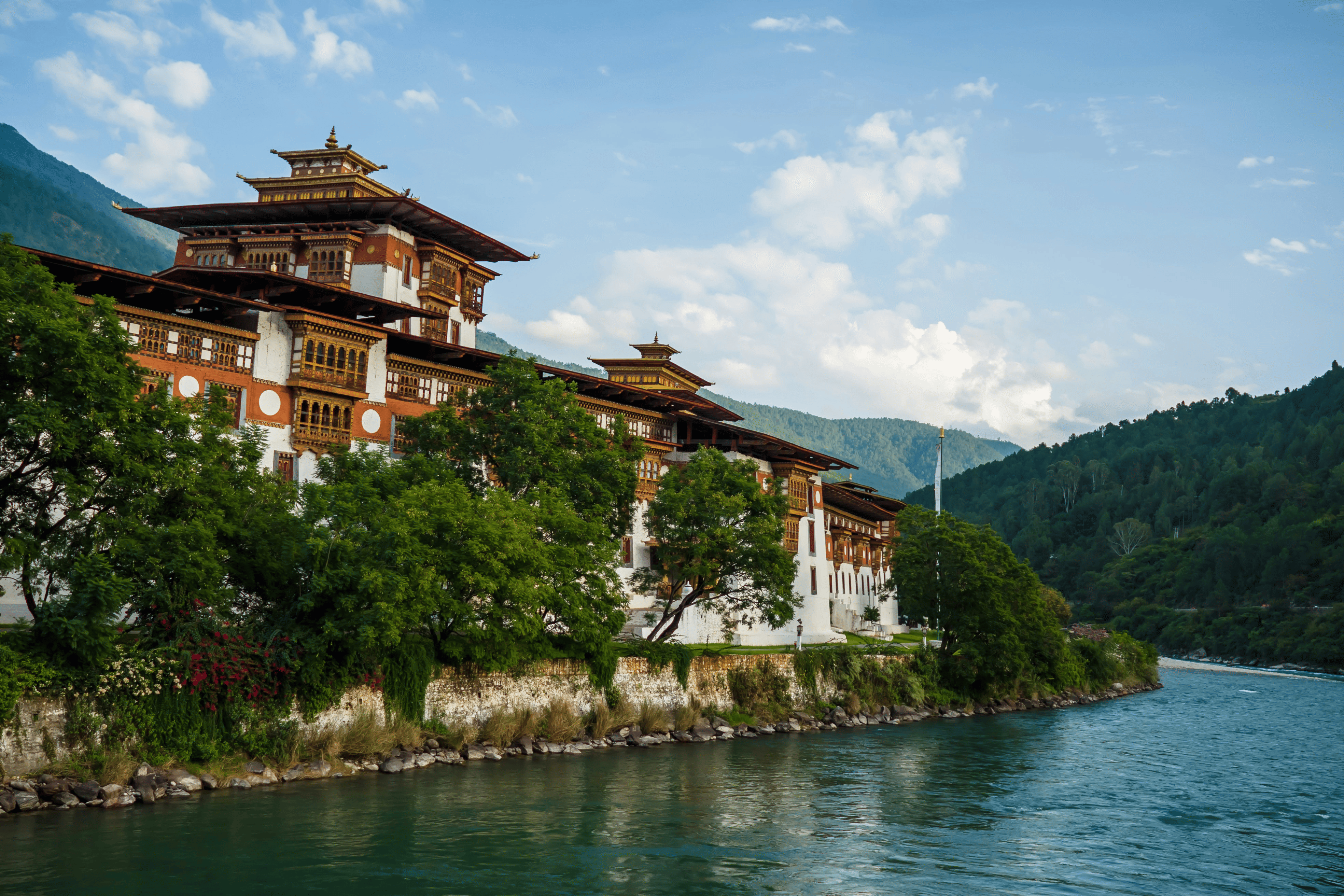
About Punakha
Punakha, situated at an altitude of 1,300 meters (4,265 feet), was the capital of Bhutan until 1955 and remains the winter seat of the Chief Abbot and the monastic body. The valley is blessed with a subtropical climate, which makes it one of the most fertile regions in the country, famous for its abundant harvests of rice and fruit. The drive from Thimphu to Punakha takes visitors across the Dochula Pass, which on clear days offers breathtaking panoramic views of the high Himalayan peaks.
The centerpiece of the valley is the Punakha Dzong, also known as Pungtang Dechen Photrang Dzong, which translates to 'The Palace of Great Happiness.' Built in 1637 by Zhabdrung Ngawang Namgyal at the junction of the Pho Chhu (Male River) and Mo Chhu (Female River), it is widely considered the most beautiful dzong in Bhutan. The fortress is a masterpiece of Bhutanese architecture, with its intricate wood carvings, vibrant murals, and massive prayer halls. It is also the site of the royal wedding of the Fifth King in 2011, a moment that remains etched in the memory of the nation.
A short distance from the dzong lies the Punakha Suspension Bridge, one of the longest in Bhutan. Adorned with colorful prayer flags, the bridge offers a thrilling walk across the Pho Chhu and provides a stunning vantage point for photographing the dzong and the surrounding mountains. The bridge connects the dzong to the village of Punakha, where life moves at a gentle pace, deeply connected to the cycles of the land.
Another significant site in the valley is the Chimi Lhakhang, also known as the Temple of the Divine Madman. Dedicated to Lama Drukpa Kunley, a much-loved 15th-century saint known for his unconventional teaching methods, the temple is a popular pilgrimage site for couples seeking blessings for children. The walk to the temple takes you through beautiful terraced rice fields and charming villages, offering a glimpse into the everyday life of the Bhutanese people.
The Punakha valley is also known for its vibrant festivals. The Punakha Tshechu and the Punakha Drubchen are held annually in the courtyard of the dzong, featuring masked dances and traditional performances that celebrate the victory of the Bhutanese over invading forces. These festivals are a time of great joy and spiritual significance, drawing people from all over the region.
In the higher reaches of the valley, the Khamsum Yulley Namgyal Chorten stands as a beacon of peace and harmony. Built by Her Majesty the Queen Mother to ward off evil and promote well-being, the chorten is a fine example of modern Bhutanese religious art. The hike to the chorten is a rewarding experience, offering spectacular views of the winding river and the emerald green valley below.
Punakha’s unique charm lies in its combination of historical grandeur, spiritual depth, and natural beauty. Its warm climate and lush landscapes provide a stark contrast to the higher valleys of Thimphu and Paro, making it a peaceful and rejuvenating destination. For anyone seeking to understand the history and heart of Bhutan, a visit to Punakha is an essential part of the journey.
Must-Visit Places
- Punakha Dzong
- Chimi Lhakhang (Fertility Temple)
- Punakha Suspension Bridge
- Khamsum Yulley Namgyal Chorten